AR portal
Scan the QR code below via the Snapchat app (or click on this link) to experience cultural burning through an augmented reality portal.

Lens preview


 Dr. Don Hankins is a Professor of Geography and Planning at California State University, Chico.Dr. Don Hankins is an artist, but not the typical kind. Instead of using traditional brushes or artboards, the California State University, Chico, professor uses fire to steward the natural landscape of forests in Big Chico Creek Ecological Preserve and other forests in the world. His work carries a special name: cultural burning.
"Lighting a fire is kind of like applying a paintbrush to a canvas... and painting a picture with that fire," said Hankins, who uses cultural burning in support of his basketry art and other purposes. "Each stroke of the fire across that canvas creates a blanket of new color that comes back with wildflowers of certain species for instance."
According to NASA, 2018 was California's worst wildfire season to record, and the yearly wildfire count has been increasing since 1980. The National Interagency Fire Center found that there is an average of 72,400 annual wildfires in the U.S. every year. Wildfires are also growing more dangerous, as the Earth's temperature is growing hotter and drier. The National Park Service also found that 85 percent of all wildfires were man made.
As wildfires continue to wreak havoc across the state, ecological experts have been looking for better methods of wildfire mitigation. Two of the wildfire preventative methods that scientists have researched are prescribed burning and cultural burning.
Prescribed burning is a procedure where professionals purposely burn regions of forest -- typically following government protocedures -- to reduce hazardous wildfire fuel or to improve wildlife habitat. Oftentimes, firefighters follow a specific burn plan that identifies specific plants and habitats that need to be treated with fire. Usually, this process can return nutrients back to soil, get rid of invasive species, and minimize the spread of disease. This process is carried out and approved by fire departments and environmental agencies such as Cal Fire.
 Hankins conducting cultural burning at the Big Chico Creek Ecological Reserve
Cultural burning describes a process where people burn specific parts of a landscape to enhance the overall health of the land, wildlife, and native people. There are many cultural reasons to burn including reduced wildfire potential and getting rid of invasive species. Most importantly, the practice heals the land holistically and encourages all elements within the landscape to thrive. Rather than controlling or taking advantage of the land, cultural burners serve their local ecosystem and reap the benefits as an exchange. The tradition was developed by indigenous peoples centuries ago and has been passed down for generations.
According to Hankins, the two procedures can have similar goals but take into account different values and cultural expectations.
"Cultural burning is utilized to meet the cultural and spiritual needs of the native people for the project area," said John Melvin, Staff Chief of Resource Protection and Improvement at Cal Fire. "Prescribed fire utilizes a lower fire intensity across the landscape to improve ecosystem health and reduce intensity of wildfire."
According to Melvin, the devastation of the 2018 Camp Fire, a few miles from Chico, could have been mitigated if officials had implemented prescribed burn procedures prior to the disaster. Although the two practices have different cultural goals, he advised that cultural burning can replace prescribed burning, and achieve the same desired result in mitigating wildfires.
"The benefits to the environment are very similar, they both reduce intensity of wildfire where prescribed and cultural burning has occurred. ... Prescribed burning is beneficial in many ways, and is a tool used to achieve cultural burning goals," Melvin said. "They are not separate or exclusive from one another."
To mitigate future wildfire disasters, Cal Fire has helped landowners and tribal representatives organize and carry out cultural burns by providing grant funding and location surveillance, Melvin said. Usually, cultural burning representatives of indigenous tribes are individuals who have a managing role in farming or medicinal herb gathering. However, within the Miwok and other tribes, most members learn and actively partake in general burnings, and even children are allowed to participate as a lifelong practice.
Hankins is recognized as one of the most well-known practitioners of cultural burning. His knowledge of the subject stems from his heritage as a descendant of the indigenous Miwok tribe, where he began cultural burning in his youth. He also has worked with other Indigenous peoples across the region and in Australia. He's been burning as part of his research for more than 20 years and has been performing cultural burningss at the Big Chico Creek Ecological Preserve since 2007. He advocates for wider spread of these techniques amongst other ecological preserves.
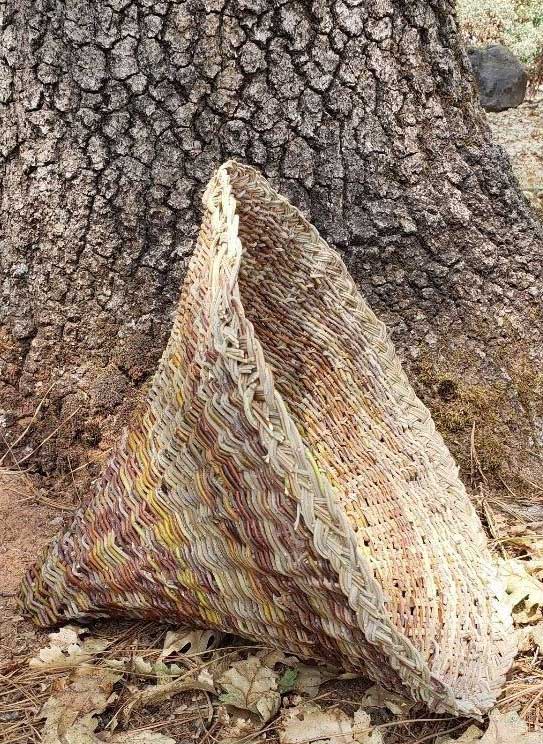 An open-work burden basket made by Hankins, used for collecting and carrying But besides Hankins, California has countless tribes that have their own cultural burning practices and procedures. These tribes include the Yurok, Karuk, Hupa, and more. Margo Robbins, a member of the Yurok Tribe and president of the Cultural Fire Management Council in the Yurok reservation, sees cultural burning as a daily routine, not just a long-term method to prevent wildfires.
"[Cultural burning] is part of our lifestyle. Our culture is dependent on putting fire on the land. Our traditional food sources, such as acorns and berries and deer or medicine plants ... lots of the things that we use from the land benefits from fire," said Robbins.
Cultural burning carries a different meaning for Native Americans like Robbins and Hankins. The practice can help keep the environment healthy, but it also serves as a lifeline for Native Americans. There are no specific parameters to the practice, but the idea is that the tribes maintain balance between their needs and the land's holistic health. Cultural burning can be used for traditional ceremonies, but more importantly, the practice unlocks natural materials and ingredients for tribes, many of which are unable to be accessed without fires.
"For Yurok people, the frame of our basket is made with Hazel. ... It needs to have fire in order to be useful for weaving," Robbins said. "And weaving baskets is an integral part of our culture. We carry our babies in baskets. We use baskets to cook and for eating bowls, or catching eels ... baskets are very central to our traditional lifestyle."
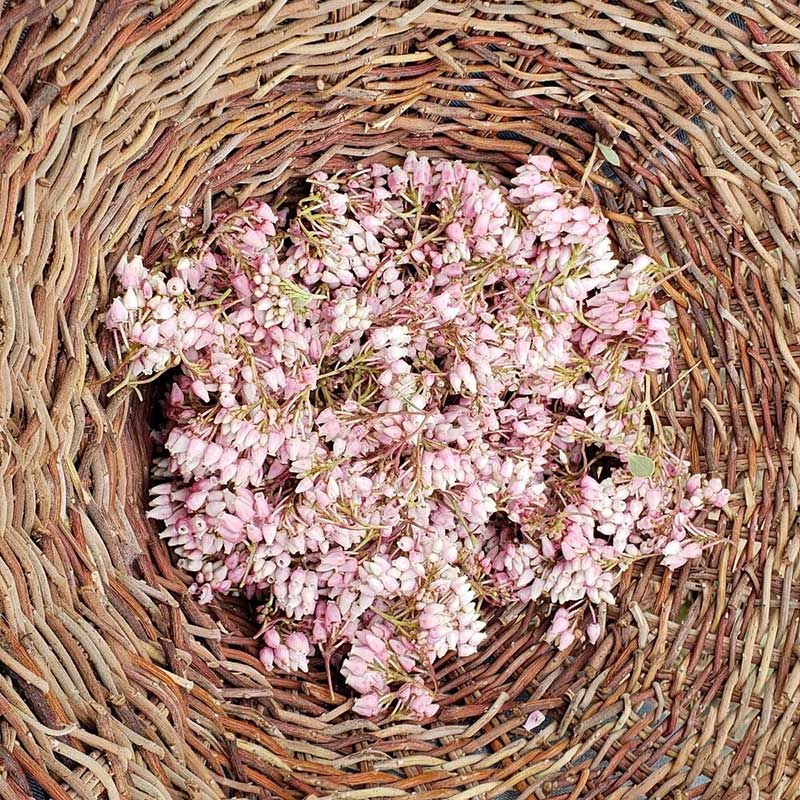 Hankins' basket filled with manzanita blossoms, which are known to be edible and contain medicinal propertiesWhether it is cultural burning or prescribed burning, both practices have an end goal of preventing wildfires. But for Native Americans, cultural burning is more than that — it's a "lifelong obligation" — a generational art that is carried out by Hankins and other tribal practitioners.
Cultural burning is a possible alternative to prescribed burning, but its ancestral roots make it hard to completely replace prescribed burning. According to Hankins, cultural burning is rooted in Native American culture and their responsibilities as "stewards of the landscape," and these values can conflict with the economic interests of agencies and industries. The limitation of cultural burning is its dependence on the Native American livelihood, making it unlikely for some agencies to completely adopt the practice.
However, despite these limitations, Hankins has seen an influx of people interested in cultural burning as an alternative. He hopes that this interest will herald a new age of environmental freedom, where Native Americans can practice cultural burning in their ancestral lands and also help agencies mitigate wildfires.
"They're trying to connect with tribes and practitioners who are doing this kind of work. Even within academic institutions, we've got classes that are being taught, where students are looking at these sorts of things," Hankins said. "It's building the general public's knowledge around it, but also getting to the point where practices are now starting to happen around it as well."
JOVRNALISM worked closely with Hankins and obtained first-hand footage of cultural burning practices and its requirements. JOVRNALISM produces an immersive documentary about the usage of cultural burning and its differences from other natural and controlled fires.
Scan the QR code below via the Snapchat app (or click on this link) to experience cultural burning through an augmented reality portal.
Lens preview